


Berlin
GERMANY


Savor & Sip

Where to dine and unwind in Berlin.

-
Currywurst
Currywurst was invented in postwar Berlin in 1949 by Herta Heuwer, who married German pork sausage to American ketchup and British curry powder. Traditionally served with fries (mit Pommes) or a bread roll (mit Brötchen). When ordering, expect to be asked whether you want it mit Darm (with casing) or ohne Darm (without casing), a distinctly Berlin choice. Do not believe the heathens who tell you Currywurst originated in Hamburg - they are the wurst apostates!
$ $ $ $ $

-
Döner Kebab
Introduced and popularized in Berlin by Turkish immigrants during the 1970s, Döner Kebab has become one of the city's signature foods. Thinly sliced meat (originally lamb, now typically chicken, veal, or a mixture) roasted on a vertical spit is served in pita-style bread with fresh salad and sauces. Ordering is simple: choose your meat, then select sauces such as garlic (Knoblauch), herb (Kräuter), or spicy (Scharf). Asking for mit allem ("with everything") will get you the full Berlin Döner experience.
$ $ $ $ $

Augustiner am Gendarmenmarkt
This bustling Bavarian beer hall offers a warm contrast to Berlin's sleek contemporary dining scene. Expect traditional specialties such as Schweinshaxe, schnitzel, sausages, and hearty seasonal dishes accompanied by Munich's famous Augustiner beers. The expansive interior and lively atmosphere make it ideal for guests wanting a convivial German dining experience without venturing far from Gendarmenmarkt. Website in German only
$ $ $ $ $

Erdinger am Gendarmenmarkt
this flagship Berlin location of Bavaria's famous Erdinger brewery combines traditional Bavarian hospitality with a prime Berlin setting. Guests can enjoy enormous pretzels, schnitzels, roast pork, sausages, duck specialties, and an impressive selection of Erdinger wheat beers. With seating for hundreds and views toward the Französischer Dom, it offers a lively atmosphere that blends Munich beer-hall culture with the energy of Berlin's historic center.
$ $ $ $ $

Ganymed Brasserie
Occupying a historic riverside building on Schiffbauerdamm, Ganymed is one of Berlin's most atmospheric dining rooms. The site dates to the late 19th century and has served as a dockworkers' restaurant, a bank, and a beloved East Berlin establishment frequented by cultural figures including Bertolt Brecht and Helene Weigel. Today it offers classic French brasserie cuisine in elegant surroundings overlooking the Spree.
$ $ $ $ $

Nante-Eck Restaurant
Located on Unter den Linden, Nante-Eck celebrates Berlin's culinary heritage. The restaurant is named after the legendary "Eckensteher Nante," a witty Berlin street character immortalized in local folklore. Guests can enjoy authentic Berlin fare including Currywurst, Schnitzel, Königsberger Klopse, and local beers while watching the activity along one of Germany's most historic boulevards.
$ $ $ $ $
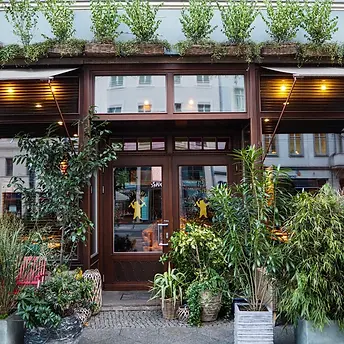
Pantry
Located on Friedrichstraße, Pantry presents contemporary German cuisine with an emphasis on seasonal ingredients and refined presentation. Traditional flavors are reimagined through modern techniques, creating a sophisticated dining experience that reflects Berlin’s evolving culinary scene. Elegant without being overly formal, it is ideal for those seeking an upscale interpretation of German cooking.
$ $ $ $ $
Paulaner am Postdamer Platz
Located beside Potsdamer Platz, Paulaner combines Bavarian beer-hall tradition with one of Berlin's most dynamic districts. Guests enjoy freshly poured Paulaner beers alongside hearty specialties such as schnitzel, roast pork, sausages, and giant pretzels. The spacious interior, lively atmosphere, and central location make it a popular choice for both locals and visitors exploring modern Berlin.
$ $ $ $ $

Restauration 1840
Located in Berlin’s charming Nikolaiviertel, Restauration 1840 recreates the atmosphere of 19th-century Berlin while serving traditional regional cuisine. The menu features hearty Prussian and Berlin specialties alongside local beers in a historic setting. Its proximity to the Spree, Berlin Cathedral, and Museum Island makes it a popular choice for visitors seeking authentic local flavor. Website in German only
$ $ $ $ $

Sphere Tim Raue
Located 207 meters above the city in Berlin's iconic Television Tower, Sphere Tim Raue is one of the most unique dining experiences in Germany. The revolving restaurant completes a full panoramic circuit while guests enjoy contemporary interpretations of classic Berlin and Brandenburg cuisine created by celebrated Berlin chef Tim Raue. Advance reservations are strongly recommended.
$ $ $ $ $

Zur Gerichtslaube
Housed in a historic building near Berlin’s Nikolaiviertel, Zur Gerichtslaube offers a classic introduction to traditional Berlin and Prussian cuisine. Guests can enjoy regional specialties such as Eisbein, Königsberger Klopse, and Berlin-style liver in a warm, old-world setting. Its location near Museum Island and Alexanderplatz makes it a convenient stop between sightseeing and dinner.
$ $ $ $ $

Zur Letzen Instanz
Often described as Berlin’s oldest restaurant, Zur letzten Instanz traces its roots to the 17th century. The historic dining rooms have welcomed generations of Berliners and notable visitors alike. Traditional German and Berlin specialties are served amid centuries of history, offering guests a memorable combination of authentic cuisine, atmosphere, and local heritage.
$ $ $ $ $

Wander & Wonder
Journey into the city’s museums and landmarks.

Neues Museum
Home to the world-famous Bust of Nefertiti, the Neues Museum combines Egyptian treasures, prehistoric artifacts, and classical antiquities within one of Berlin's most beautifully restored historic buildings. Originally opened in 1855, the building was heavily damaged during World War II, and masterfully reconstructed.
Admission Costs: €14

Altes Museum
Designed by Karl Friedrich Schinkel and opened in 1830, the Altes Museum is one of the masterpieces of German Neoclassical architecture. Its collection showcases ancient Greek, Etruscan, and Roman civilizations, while its grand rotunda (modeled after Rome's Pantheon) remains one of Berlin's most elegant museum spaces.
Admission Costs: €12 to €14 depending on what you visit
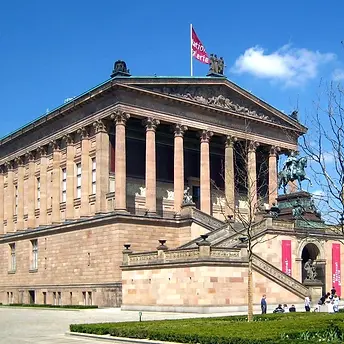
Alte Nationalgalerie
Often described as a "temple of art," the Alte Nationalgalerie houses one of Germany's finest collections of 19th-century painting and sculpture. Visitors encounter works by Caspar David Friedrich, Adolph Menzel, Monet, Manet, and Renoir in a setting that resembles a classical Greek sanctuary overlooking Museum Island.
Admission Costs: €14
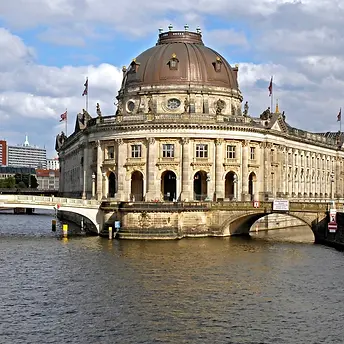
Bode Museum
Occupying the northern tip of Museum Island, the Bode Museum combines Byzantine art, medieval sculpture, and one of the world's largest numismatic collections. Its dramatic dome, riverside setting, and ornate interiors make it as much an architectural attraction as a museum.
Admission Cost: €12 to €14 depending on what you visit

Pergamon Museum
While the main Pergamon Museum remains closed for extensive renovation until 2027, visitors can still experience many highlights through the remarkable Pergamon Panorama. This immersive 360º installation recreates the ancient city of Pergamon and presents major artifacts from one of Germany's most celebrated archaeological collections.
Admission Cost: €14

Topography of Terror
Located on the former site of the Gestapo, SS, and Reich Security Main Office headquarters, this powerful documentation center examines the rise and machinery of Nazi terror. Combining indoor exhibitions, archaeological remains, and preserved sections of the Berlin Wall, it is among Berlin's most important historical sites.
Admission Cost: Free

DDR Museum
One of Berlin's most interactive museums, the DDR Museum explores daily life in East Germany. Visitors can sit inside a Trabant, examine Stasi-era artifacts, open cupboards in a reconstructed East German apartment, and gain insight into life behind the Iron Curtain.
Admission Cost: €13 to €15

German Spy Museum
Perfectly suited to Berlin's espionage history, this museum explores spying from biblical times through the Cold War and into the digital age. Interactive exhibits, spy gadgets, Enigma machines, and stories of famous intelligence operations make it especially popular with visitors interested in Cold War history.
Admission Cost: €21 to €24

Allied Museum
Located in Berlin’s former American Sector, the Allied Museum explores the U.S., British, and French presence from 1945 to 1994. Highlights include the last U.S. Army guardhouse used at Checkpoint Charlie, a Berlin Airlift “Raisin Bomber,” a French Duty Train carriage, Cold War espionage exhibits, and artifacts from daily life in divided Berlin.
Admission Cost: Free (special exhibits may have a cost)

Reichstag Building
Home of the German Parliament, the Reichstag combines imperial grandeur with Norman Foster's iconic glass dome. Visitors enjoy panoramic views of Berlin while literally walking above Germany's elected representatives, as their chambers are directly below the dome.
Admission Cost: Free (must reserve spots in advance online)

Berlin Cathedral
The Berliner Dom, the capital city's largest Protestant church, dominates Museum Island with its massive copper-green dome. Inside you will find lavish interiors, royal tombs, and a dome walkway offering exceptional views onto Museum Island and the city.
Admission Cost: €10 to €12

Berlin TV Tower
At 368 m / 1,266 ft, the Fernsehturm remains Germany's tallest structure. Opened in 1969 by East Germany as a symbol of socialist modernity, it offers unmatched 360° panoramas across Berlin. Visitors pass through airport-style security; those unable to evacuate independently during an emergency may not ascend the tower.
Admission Cost: €25.50 +

Checkpoint Charlie Museum
The most famous crossing point between East and West Berlin became a focal point of Cold War confrontation. Today, visitors can see a replica of the original checkpoint guardhouse (slightly offset from its original location due to traffic considerations) and explore dramatic escape stories at the adjacent museum.
Admission Cost: €25.50 (museum)

Jewish Memorial
Consisting of 2,711 concrete stelae spread across a vast field near the Brandenburg Gate, the Memorial to the Murdered Jews of Europe is a moving memorial that invites reflection on the Holocaust through powerful abstraction and scale, complimented by an underground information center.
Admission Cost: Free (monument and information center)
Retail Therapy
Places to help the German economy

KaDeWe
Opened in 1907, KaDeWe (Kaufhaus Des Westens - Shopping Center of the West) is Germany's most famous department store and one of Europe's largest. Long a symbol of West Berlin's prosperity during the Cold War, it offers luxury fashion, cosmetics, gourmet foods, and fine wines across multiple floors. The legendary 6th-floor food hall and 7th-floor restaurants attract visitors from around the world.

Galeria Alexanderplatz
Dominating Alexanderplatz, this department store occupies the former Centrum Warenhaus, East Germany's flagship retail store. For many East Germans, it represented one of the largest and most modern shopping destinations in the GDR. Today, the building continues its retail tradition while offering visitors a tangible connection to everyday consumer life in communist East Berlin.

Europa Center Water Clock
One of West Berlin’s most beloved and hidden landmarks, the Water Clock in the Europa Center shopping complex, has fascinated visitors since 1982. Located near the Kaiser Wilhelm Memorial Church, its transparent tubes, floating spheres, and colored liquids use water pressure and gravity to tell time. For the best experience, arrive a few minutes before 1:00 PM and stand back and off to the side, so you can better take in the whole cascade of water when the mechanism resets for the next 12-hour cycle.